
Phil Chats With Chelmsford City FC Legend, Tony Butcher
Tony Butcher has an unrivalled status in Chelmsford City’s record books. His 560 matches and 290 goals are both club records. To a generation of Chelmsford folk Tony’s goal scoring exploits as an inside forward are legend, and are synonymous with City’s glory days.
A talented player in his youth he represented Kings Road School, Rainsford School, National Association of Boys Clubs and Chelmsford City Reserves before National Service snatched him away at a crucial stage of his development as a player.
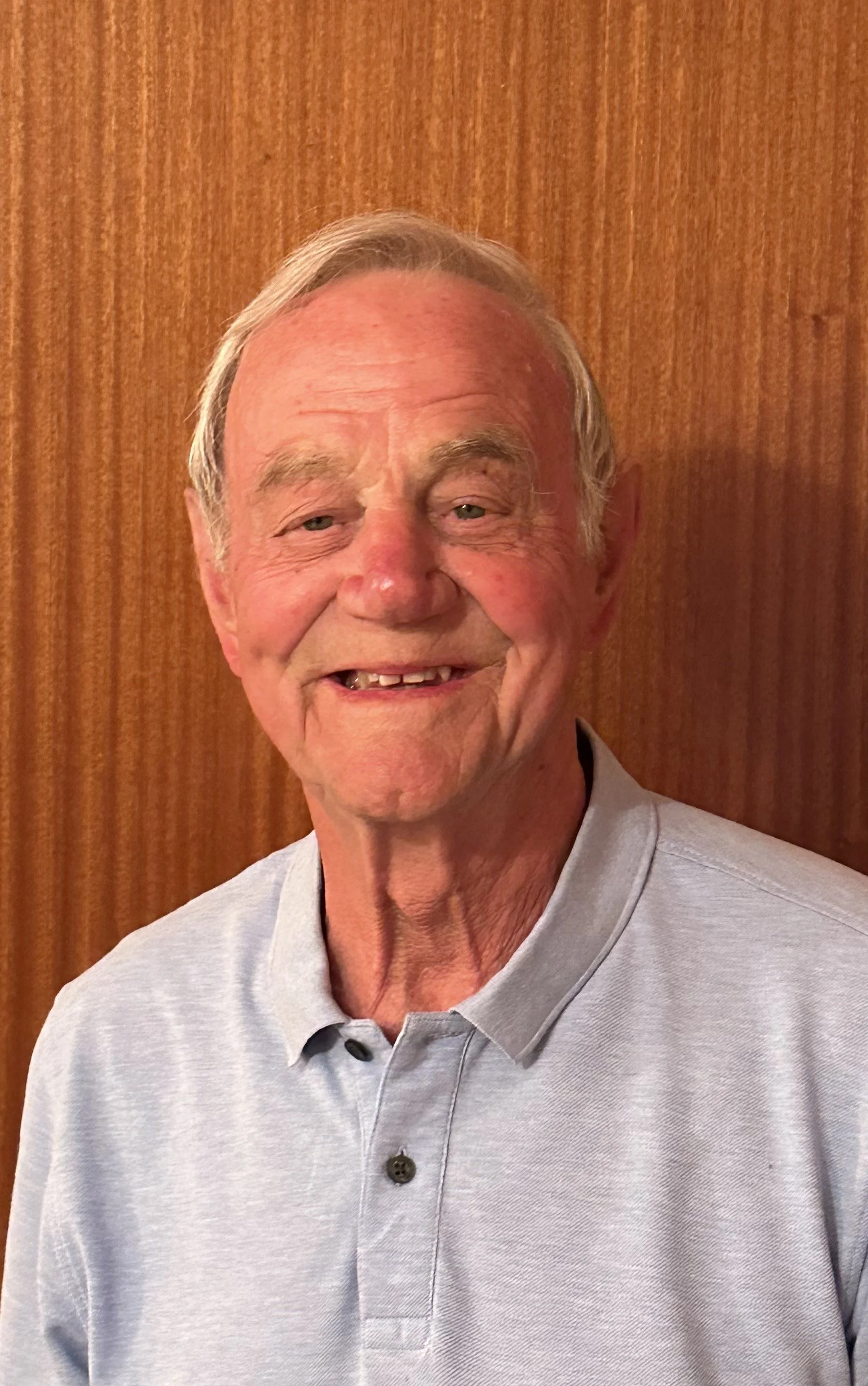
Born and raised in Chelmsford, the eldest of five boys, and now in his late eighties he resides in Writtle. Still very fit and active Tony is an ever-popular local figure and regularly attends City’s home fixtures.
Phil spoke at length with Tony at his home reflecting that, “The stories came easily and are recalled with fondness, pride and with an impressive level of detail; Tony’s memory is as sharp as the goal scoring talent of his younger days! It’s very evident just how much football has shaped and fulfilled Tony’s life.”
Phil: I recall you running the local paper shop Tony. How long have you lived in Writtle?
Tony: I took the shop on in 1973 shortly after I retired from football. It took a couple of years to get going but it became a great little business. A couple of my claims to fame are that Joe Thomas, star of The Inbetweeners, was one of my twelve paper boys and Norbert Phillip, former West Indies and Essex cricketer, lived opposite and I would regularly give him a lift to the County Ground. He was a lovely fella.
Phil: Tell me a bit about your early days playing for City.
Tony: My early opportunities were limited by National Service. During my time in the army I didn’t train at all but I turned out for City when I was on leave, played three first team matches and scored in all of them. When I eventually signed as a professional in May 1957 I received a £10 signing-on fee and was paid £9 per week supplemented by income from a part-time job.
Phil: What type of player were you?
Tony: I played a Wayne Rooney type role but my idol was always Fulham’s Johnny Haynes. However, I always wore the number 8 having been inspired by Cecil McCormack when he played for City. I was always very fit and lean as a youngster - the legacy of a post-war diet and cycling several miles a day for my paper round - had a good turn of speed and was a good header of the ball.
Phil: Your records for City will never be bettered. You must be proud of them and look back on your playing days with great fondness?
Tony: Thank you. Yes, to have scored nine hat-tricks over my 12 years and a season best total of 47 goals makes me very proud. Looking back, football has given me a wonderful life.
Phil: After 12 years playing for City you won the Southern League title in 1967-68 and then, aged 32, you left for Cambridge United and won the title again the following season. What’s the story behind your departure?
Tony: Bill Cassidy, my striking partner, had left City to play for Detroit Cougars but was back in the UK in little over a year. He signed for Cambridge and he made me aware that they were desperate to sign me too. I was persuaded to sign and rewarded with a handsome signing-on fee. That season concluded with us having to beat Kettering to win the title and I ended up playing despite carrying an injury. I scored a hat-trick but, suffering with my hamstring, I was eventually substituted with 20 minutes to go. So, I won the Southern League title in two consecutive seasons.
Phil: You returned to City after only 16 months, why was that?
Tony: I’d never moved house to Cambridge and I used to travel up just once a week to train. In 1969-70 City and Cambridge met in the cup and City won 3-2. I got the blame for the defeat, was dropped, and shortly afterwards I was made aware that City wanted me back. I was rewarded with a testimonial in which Jimmy Greaves played.
Phil: I recall you mentioning events on the eve of the World Cup final 1966.
Tony: Yes, Charlie Hurst, Sir Geoff’s father, had arranged for me and Terry Eades to visit the Hendon Hall Hotel where the England team were based. The team were due to sign a ball for us to auction for charity. Geoff invited me in to “meet the lads” but, not wanting to intrude, I politely declined the offer. Geoff was a great lad, another Rainsford boy and about four years younger than me. I remember him playing football and getting into scrapes at Melbourne Park.
Phil: You didn’t play in the Football League but you played in front of some big crowds. What was the biggest?
Tony: 16,403 against Colchester United in the 2nd round of the FA Cup in 1968. We’d knocked out Oxford United – then a 3rd Division side - in the previous round after two replays and I managed to score three goals over the three matches. I was up against Ron Atkinson and I remain on speaking terms with him. Unfortunately, we subsequently lost 2-0 in front of that massive crowd against Colchester who then drew West Brom who beat them and went on to win the cup.
City’s players used to be on a bonus for drawing big crowds. Each of us would get 2s 6d for every 100 attendees over 3,500 so it was often a good earner.
Due to our large crowds we occasionally got to play matches against teams of celebrities and I recall, on one occasion, an unsuccessful attempt to chip David Frost who was in goal for a celebrity eleven.
I got close to playing for clubs in the Football League on a number of occasions but various circumstances scuppered my chances, including the two crucial years I missed as an 18-year while on National Service and then choosing to leave Cambridge before their second consecutive Southern League title and their election to the Football League.
Phil: City were considered a wealthy club back then. Where did that reputation come from and why didn’t it secure the club’s promotion to the Football League?
Tony: John Coward, the then Chairman, was a wealthy man who was passionate about getting City into the Football League. He was a great man, so kind-hearted. At one time the club owned 11 houses locally and certain players’ contracts included accommodation. This was in the days when the maximum wage limited players’ pay in the Football League. Bobby Mason was on the transfer list at Wolves and Cardiff City had offered £20k for him. However, he was enticed to City with a £2k signing-on fee, generous wages and free housing. Understandably this upset Wolves because they missed out on sizeable transfer money. City’s reputation amongst league clubs was damaged and they were banned from applying for league membership for 5 seasons. So, despite winning the Southern League on three occasions they were never rewarded with election to the Football League.
As another indicator of City’s wealth, I recall that in the early 60s the team flew from Southend to play Yeovil in the first leg of the Southern League Cup Final. We were the first non-league club to ever fly to a match. It was in a Dakota and it left me feeling unwell!
Phil: Thank you so much for your time Tony, it’s been really entertaining hearing your tales.
Tony: You’re very welcome, it’s been my pleasure.
Tony took delight in recalling a wealth of fascinating and amusing stories, often featuring his acquaintance with some of the biggest names in British football history; Geoff Hurst, Jimmy Greaves, Tommy Docherty, Ron Atkinson, Tony Nicholas, Nigel Spink, Dennis Hatsell, Peter Brabrook, Brian Dear, Peter Shreeves and many others featured during our chat.
One thing that really struck me whilst chatting to Tony was that he refers to all of his acquaintances, inside and outside the game in glowing terms; lovely bloke, wonderful man, super lad…..etc. That he hasn’t got a bad word to say about anyone is, I’m sure, as much a mark of the warmth of his character as it is about the virtues of his team mates and associates.